
Innovate to Eradicate: TB Alliance’s 1x1x1 Strategy
Tuberculosis remains the world’s deadliest infectious disease, in part because treatment is still too long, complex, and difficult to complete. Ending TB will not be possible without shorter, simpler treatments that people can easily access and complete. TB Alliance’s vision is to transform how TB is treated – developing shorter, simpler, safer, and more effective cures for all forms of TB that are affordable, accessible, and widely adopted by those who need them most.
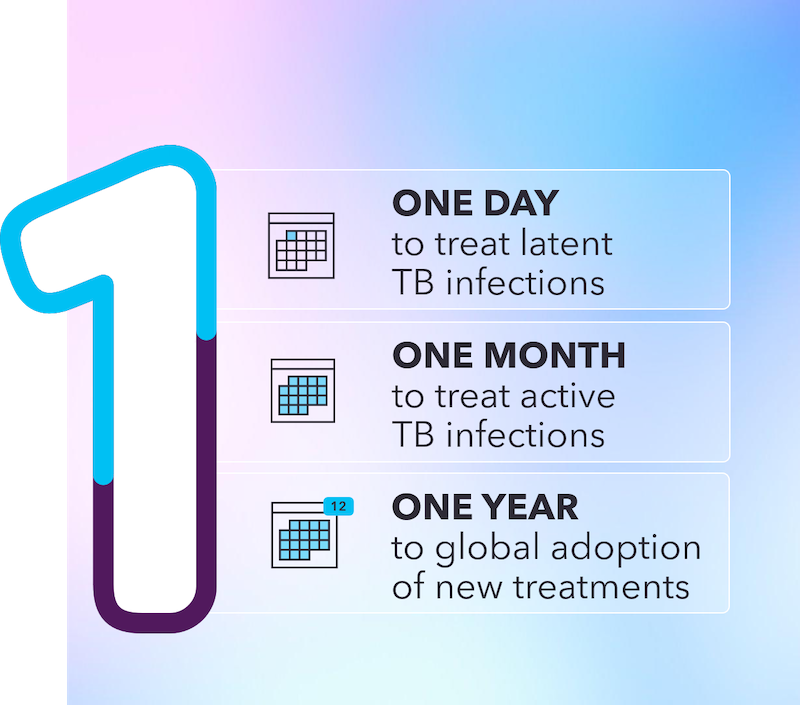
At the center of this vision is our 1x1x1 strategy: One-month treatment for active TB and one-day treatment for latent TB, with new treatments accessible to all within one year of approval.
1-Day Treatment for Latent TB
How can one-day latent TB treatment help end TB?
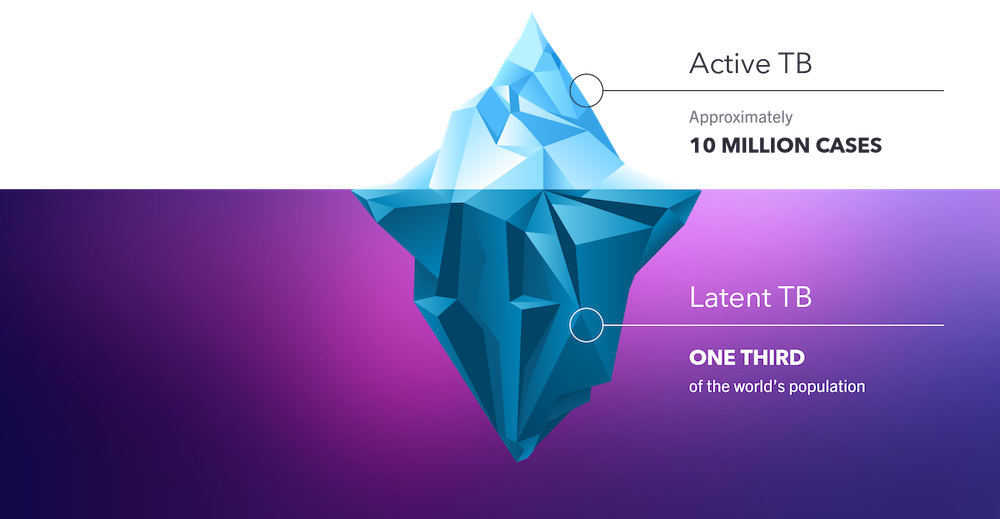
Roughly 1.7 billion people—a quarter of the world’s population—are infected with the TB bacillus. This is know as having latent TB. About 5-10% people with latent will develop active TB over their lifetimes. Scaling the treatment of latent TB before it has the chance to become active is key to any realistic vision of ending TB, however current preventive treatment can take months, which creates barriers to adherence and completion.
How can TB Alliance achieve one-day latent TB treatment?
TB Alliance is pursuing ultra-short preventive therapies that could reduce treatment to a single visit. Our strategy combines late-stage, highly potent drug candidates already in our portfolio with long-acting injectable formulations to realize a “test-and-treat” model for tackling latent TB.
1-Month Treatment for Active TB
How can one-month active TB treatment help end TB?
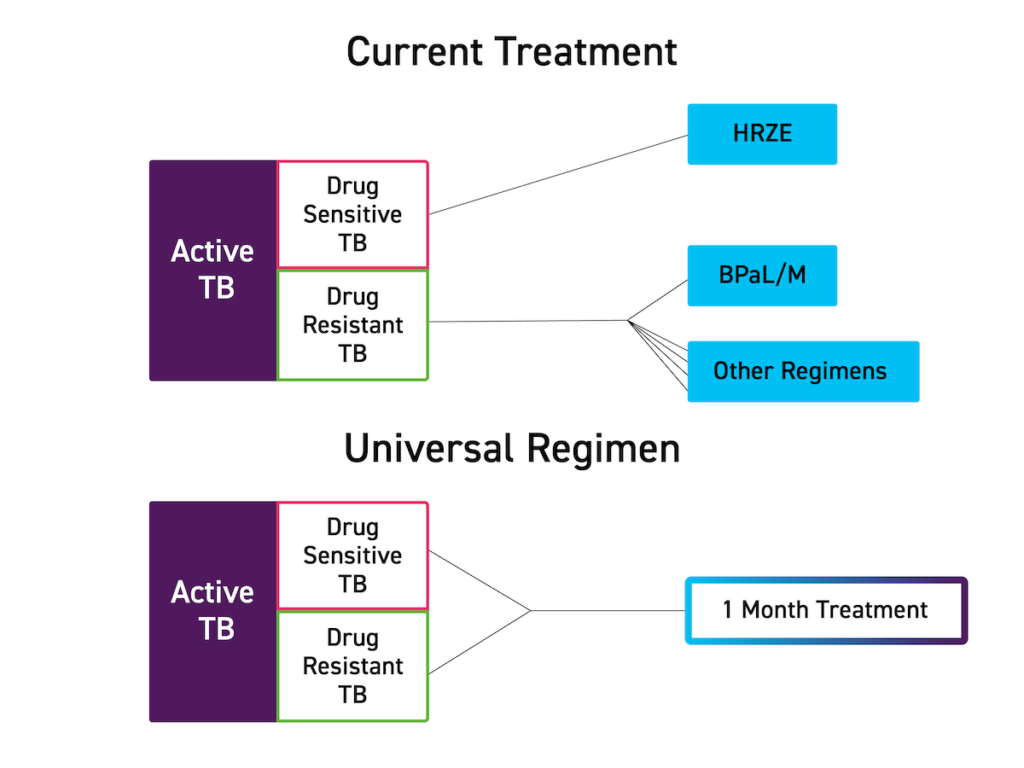
More than 10 million people develop active TB each year. Approximately 400,000 cases of these individuals have drug-resistant TB. Currently, treatment remains divided between drug-susceptible and drug-resistant disease. Currently, either path requires at least 6 months of treatment. TB Alliance is working to replace this complexity with universal regimens capable of treating all forms of active TB quickly and effectively.
A universal treatment would:
- Treat both drug-susceptible and drug-resistant TB
- Be short, safe, and well-tolerated
- Work across diverse patient populations
- Enable rapid treatment without complex diagnostic requirements
- Diminish the relevance of drug resistance in TB
- Simplify care, accelerate access, and improve outcomes globally
How can TB Alliance achieve one-month, universal treatments for active TB?
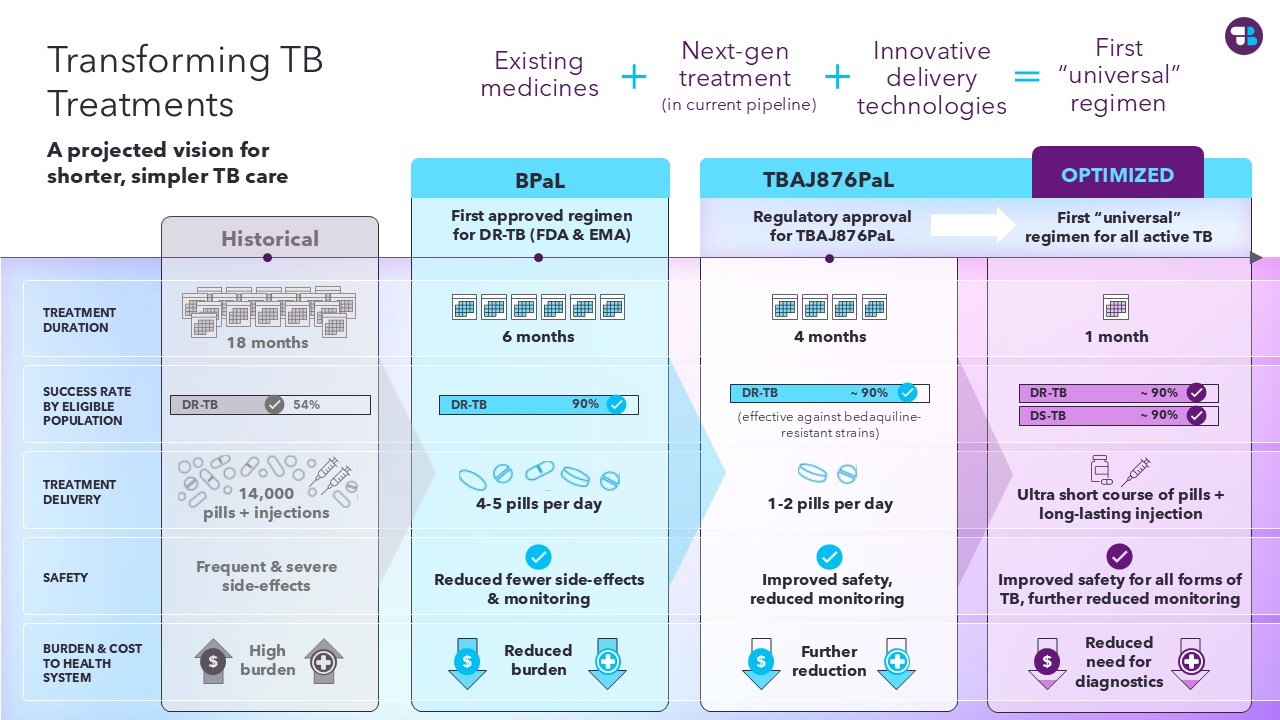
The components of a universal, one-month treatment for active TB either already exist or are currently in development. TB Alliance’s approved drug, pretomanid, and late-stage drug candidate, sorfequiline, form the backbone of next-generation regimens designed to dramatically shorten treatment for active TB. The SPaL regimen (sorfequiline, pretomanid, linezolid) has demonstrated greater potency and improved safety compared to current standards of care for both drug-sensitive and drug-resistant TB. TB Alliance is pairing more potent TB drugs and regimens with long-acting injectables and host-directed therapies that enhance immune response and further accelerate cure. Together, they create a pathway toward a one-month universal TB regimen.
A Regimen-Based Approach Accelerates the Path to New Cures
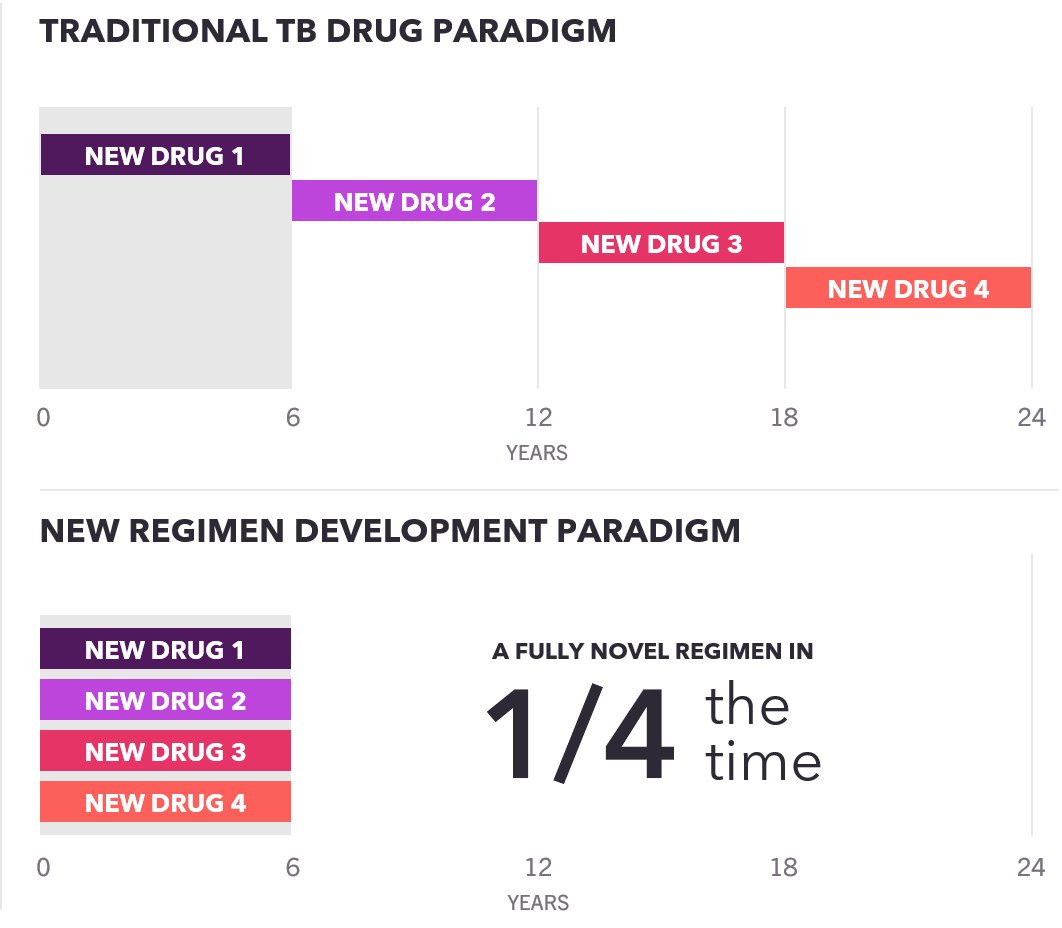
Mycobacterium tuberculosis (M. tb) is incredibly adept at developing resistance to treatment, therefore treating TB requires using a combination of multiple drugs. Traditionally, new TB drugs were developed and introduced one at a time—requiring years or even decades to assemble improved treatment regimens.
To more rapidly and cost-effectively achieve whole new regimens, TB Alliance pioneered a regimen-based development approach, designing and advancing combinations of new drugs together rather than sequentially. This approach reduces the cost and length of product development, while increasing opportunities to improve efficacy, shorten treatment, and reduce the risk of resistance.
Now widely adopted across TB R&D, regimen-based development approach has become a foundational element of how new TB treatments are developed—reflecting TB Alliance’s role in shaping more efficient pathways from discovery to patient impact.
Access Within 1 Year of Approval
How does rapid access to new treatments help end TB?:
Scientific breakthroughs only save lives when they reach the people who need them. TB Alliance has embedded global access into every stage of development, building an integrated model spanning evidence generation, policy engagement, implementation, market shaping, community engagement, and digital tools.
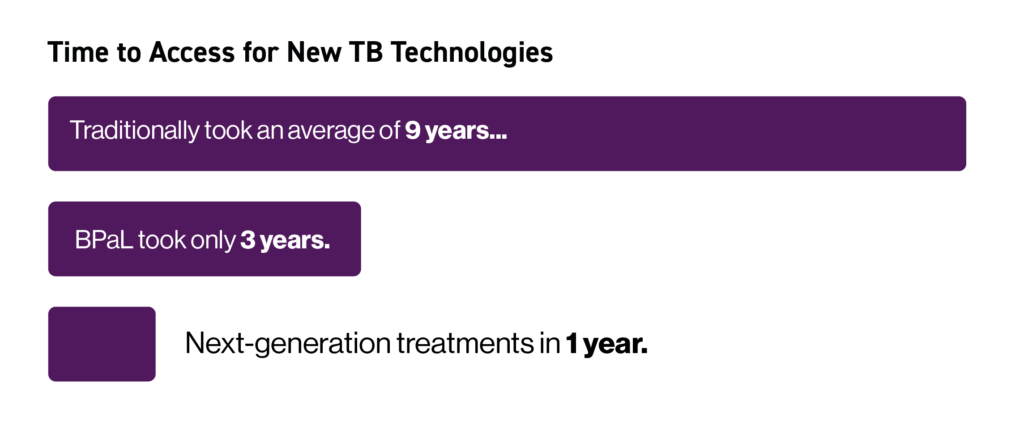
This model has already delivered historic results. BPaL/M achieved the fastest and widest rollout of a modern TB treatment, reaching global access in just three years instead of the typical seven to nine. Pretomanid procurement now covers approximately 80% of the global drug-resistant TB market.
How can TB Alliance access to next-generation treatments within one year?
With this mature access engine in place, and applying the learnings from the introduction of pretomanid and the BPaL/M regimens, TB Alliance is now working to refine and expand its access strategies and initiaitves to ensure its next generation of treatments can reach all who need them within just one year of approval.
TB Medicines for All
TB Alliance has the largest portfolio of potential TB treatments in the world. Our pipeline includes several late-stage drug regimens poised to make a transformative impact on the disease. Additionally, we are dedicated to ensuring our products are approved for vulnerable and traditionally underserved communities, including children and pregnant people.
For the latest updates on our projects, please visit our Pipeline page or Clinicaltrials.gov. To schedule a briefing, please contact communications@tballiance.org. Consult our open access policy for more information on our commitment to information sharing and transparency.
TB Alliance prioritizes the following attributes when determining programs appropriate for development
- Novel mechanism of action
- Effective against TB and drug-resistant TB
- Low cost of goods
- Suitable for oral administration
- Compatible with anti-retroviral therapy for people with TB-HIV co-infection