Future planning. Sustainable supply. Healthy Markets.
The treatment landscape for drug-resistant tuberculosis (DR-TB) has evolved rapidly following the introduction of shorter, all-oral regimens. Six-month treatment combinations, including those built around bedaquiline, pretomanid, and linezolid, are increasingly improving patient outcomes while reducing programmatic burden. As countries have revised national guidelines and scaled up implementation, understanding the pace and trajectory of regimen transition has become critical for future planning, budgeting, and procurement.
Projecting realistic future usage of new treatments, especially lifesaving ones like those for DR-TB, is crucial for ensuring supply security and avoiding disruptions in access. National tuberculosis programs, global donors, and manufacturers rely on forward-looking projections to allocate funding and to guide market shaping interventions, and production volumes.
TREND-TB estimates projections of future DR-TB treatments and regimen use to support better global and national planning. It informs procurement planning, financing strategies and coordinated stakeholder efforts to ensure sustainable access to evolving DR-TB treatment regimens and helps strengthen market readiness. This tool is updated on a regular basis to accommodate new products and guidelines of use.
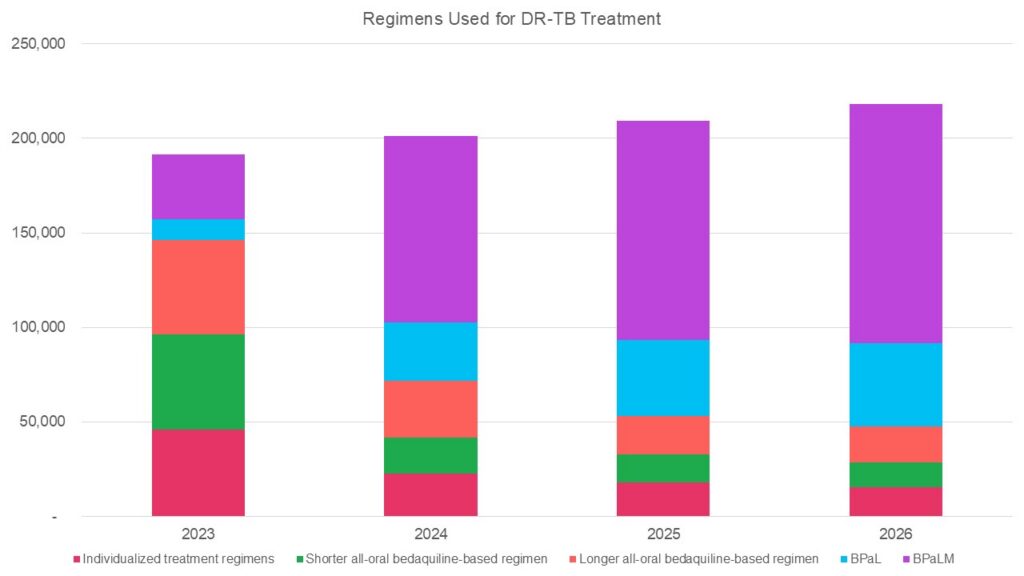
Our publication projects 78% DR-TB patients globally using BPaL/BPaLM regimens, while 6%, 9% and 7% patients are projected to use shorter 9-month regimen, longer regimens and individualized regimens respectively by 2026.